Binder rheology & phase behavior
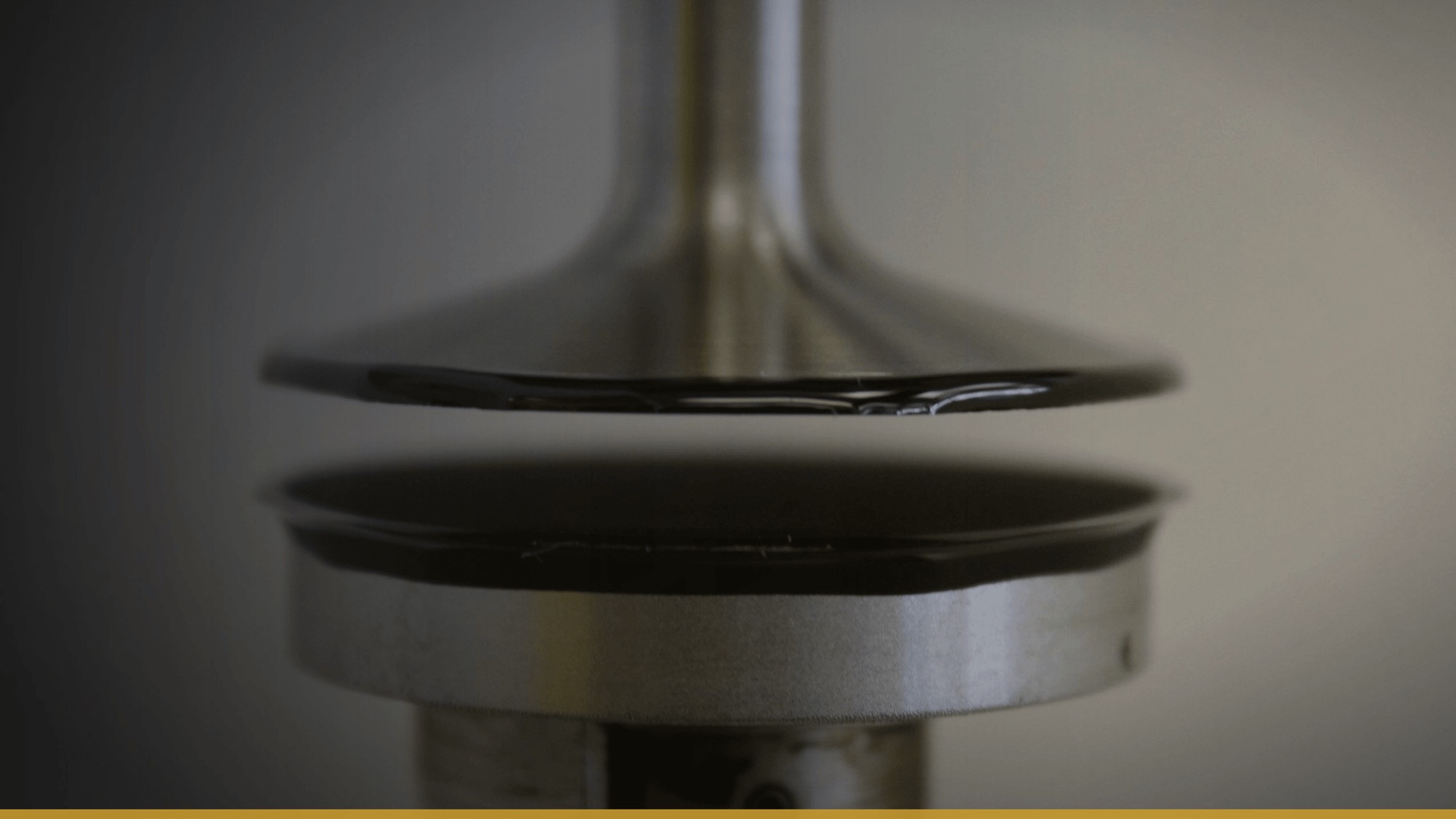
DSR, BBR, glass transition, phase stability, physical hardening, aging, and relaxation — including binder response that doesn’t follow the textbook.

Technical capability
Deep asphalt and bitumen expertise, applied where material behavior, refinery reality, lab data, and specification limits all have to agree before a decision is made.
How the depth shows up
Deep expertise earns its keep by making things shorter — ruling out the four things that don’t matter so the one that does gets the attention. Every engagement is scoped to a specific decision and sized to it, from a two-page memo that settles an acceptance dispute to an advisory role through a product-development program.
The standard stays constant: every conclusion traces to evidence, uncertainty is stated rather than buried, and the recommendation is one you can put in front of a customer, an agency, or a board.
The differentiator
A binder is decided at the refinery, judged in the lab, and proven on the road. When those three don’t talk to each other, good product gets rejected and bad product gets shipped. The depth here holds all three in view at once — so a lab number is read against how the binder was made and how it will behave under traffic and climate.
Where the depth applies
Engagements rarely draw on all six. The work is to find the two or three that actually govern a decision — and bring the rest in only when they change the answer.
DSR, BBR, glass transition, phase stability, physical hardening, aging, and relaxation — including binder response that doesn’t follow the textbook.
Superpave, MSCR, phase angle, aging criteria, and low-temperature performance — and the acceptance confidence that rides on them.
Support where crude selection, refining, distillation, blending, storage, and logistics meet the binder properties a customer sees.
Binder-level review of RAP strategy, diffusion, virgin binder selection, softeners, and where the performance risk actually sits.
Practical reading of polymer-modified asphalt, elastic response, complex rheology, and compatibility — and the training a lab needs to run these tests well.
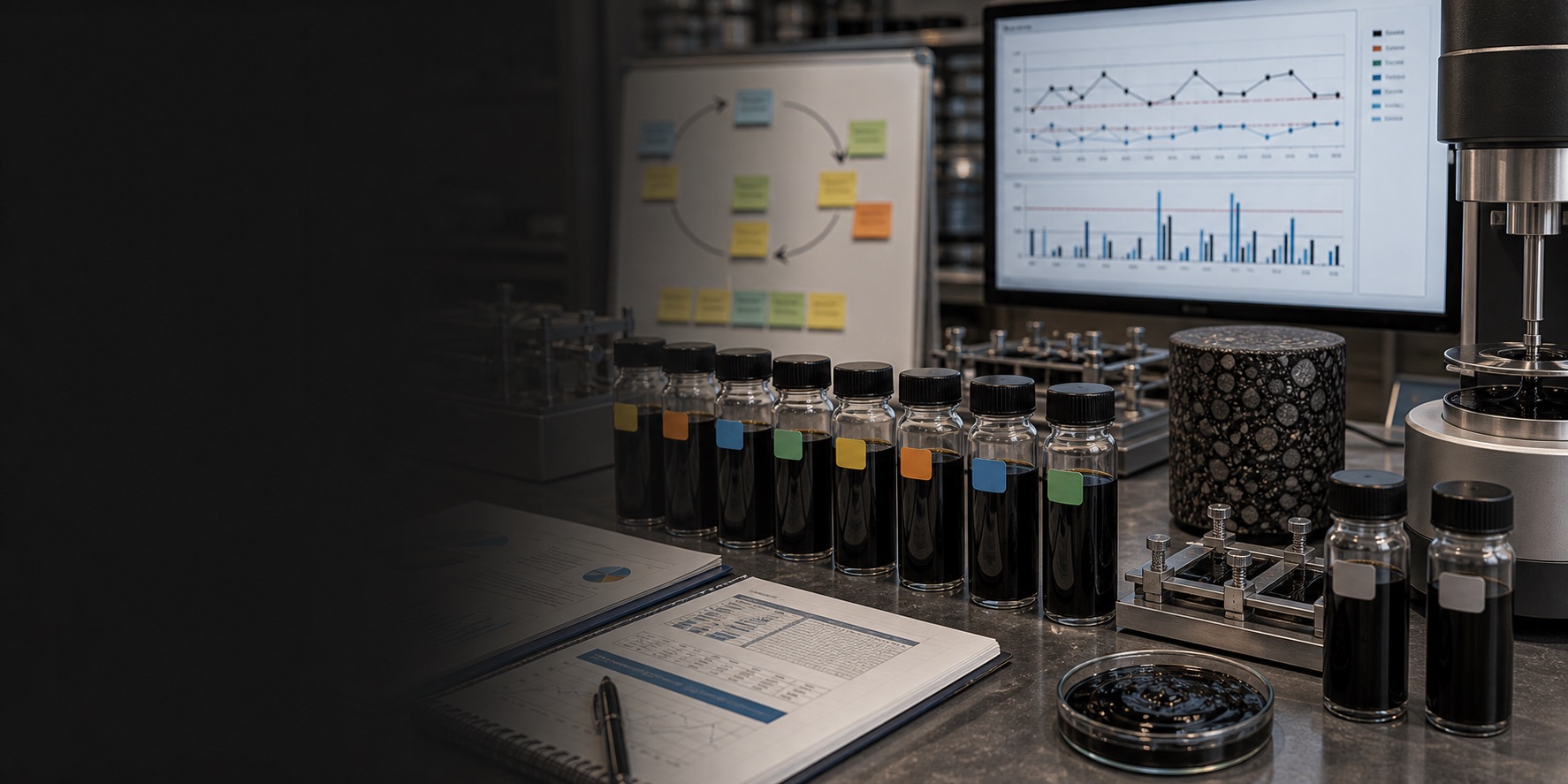
DSR, PAV, RTFO, BBR, MSCR, SOPs, repeatability, reproducibility, and the variation-reduction work that keeps a lab defensible.
How an engagement runs
An engagement starts with the decision, not the dataset: what you are deciding, which constraints are real, who has to be convinced, and what getting it wrong costs. Only then does data earn its place — and the output takes whatever form the decision needs: a technical memo, a review meeting, a test plan, a training session, a QA program, or a broader advisory project.
“The goal isn’t more data. It’s one decision the organization can act on and defend.”
How composition shows up
Crude slate, refining, and aging all shape one property the grade sheet barely captures — how well an aged binder relaxes stress instead of storing it until it embrittles. Phase angle carries that signal. Read at a fixed, physically meaningful stiffness rather than a shifting one, it becomes a durability fingerprint that separates ductile, well-relaxing binders from materials that look acceptable on paper and behave brittle in the field.
It is a composition-and-relaxation reading, not a fatigue number — a screening signal that tells two same-grade binders apart before you commit a slate, a supply change, or a recycling plan.
A screening signal drawn from public SHRP and peer-reviewed data. It informs a decision; it does not replace field validation.
Read the phase angle δ at a fixed point — where |G*| = 8967 kPa — and composition shows up as relaxation quality, not just stiffness.
Named the “Pavel Kriz Phase Angle, δPK” in a 2026 MassDOT webinar, and cited in a peer-reviewed Transportation Research Record paper (2026, with G. Rowe).
Start here
Share the objective, the data you have, and the call you need to make.
Every engagement is confidential.